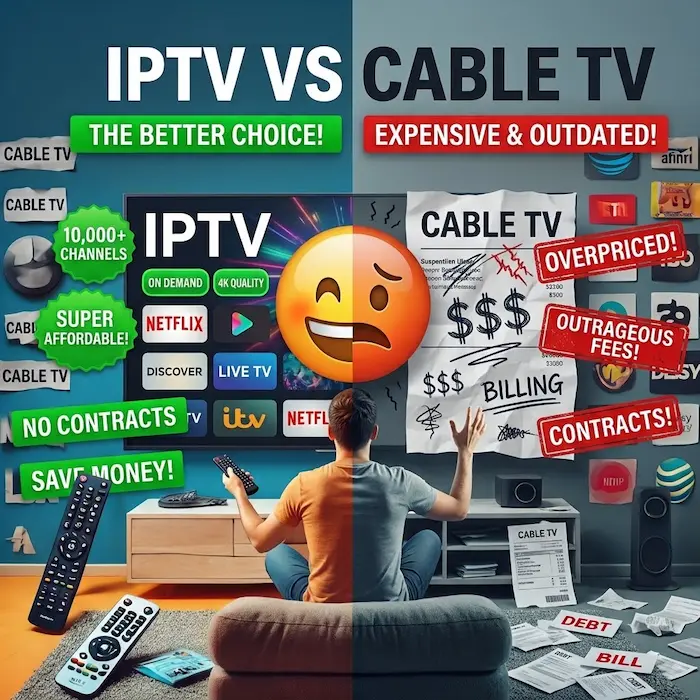
Choosing between IPTV and cable TV is now a common decision for Canadian households. While cable has been the traditional way to watch live television for decades, IPTV has introduced a modern alternative by delivering channels through high-speed internet technology and supporting a wider range of connected screens.
The difference is not only about how channels are delivered. It directly affects monthly pricing, device compatibility, viewing flexibility, channel options, and the overall entertainment experience at home.
In this comparison,
ROXTV examines IPTV Canada and cable TV side by side, explaining the advantages, limitations, and key factors Canadian viewers should consider before choosing their next television solution.
💡 Canadian Cable Cost Reality:
Traditional Canadian cable packages often exceed $100+ per month after adding hardware rentals and sports tiers. In contrast, ROXTV Ultimate plans start at just $14.99 USD with zero equipment rental fees, delivering over 47,000 live channels and 150,000+ movies backed by a 7-day money-back guarantee.
What Is IPTV?
IPTV, or Internet Protocol Television, is a method of delivering live television and on-demand content through an internet connection rather than through traditional coaxial cable networks or satellite signals.
Instead of receiving television channels through a physical cable connection, IPTV transmits digital video streams through internet protocols. The content is streamed directly to a compatible application or device, allowing viewers to watch television across modern connected platforms.
Many users access IPTV through devices such as Smart TVs, Android TV devices, Amazon Firesticks, streaming boxes, smartphones, tablets, and computers. The exact viewing experience depends on factors such as internet stability, device performance, and the quality of the service infrastructure.
For Canadian viewers exploring this type of television solution, understanding how
IPTV services in Canada work provides a clearer picture of what this technology offers and how it differs from traditional television delivery.
The basic principle behind IPTV is similar to other internet-based video services. Television content is encoded into digital data packets and transmitted through a network connection to the viewer’s device.
A typical IPTV setup includes:
- A stable broadband internet connection.
- A compatible device such as a Smart TV, streaming box, or mobile device.
- An IPTV application or player.
- Access credentials or an active subscription depending on the service.
Unlike traditional cable television, IPTV is not tied to a single television receiver. Users can access content through different devices, which makes it particularly appealing to households that use multiple screens.
Internet Requirements
Because IPTV depends on internet delivery, the quality of the home network plays an important role in the viewing experience. A strong connection is not only about download speed; stability, Wi-Fi performance, and network congestion can also affect playback.
Important factors and speed benchmarks that influence IPTV performance include:
- Internet bandwidth: A minimum of 15–25 Mbps for standard HD and 50+ Mbps for buffer-free 4K streaming.
- Wi-Fi signal strength: 5 GHz Wi-Fi bands or direct Ethernet cables provide the lowest latency.
- Router quality: Modern dual-band routers handle concurrent household traffic better.
- Number of connected devices: Shared network load during peak hours.
- Network traffic during peak hours: Low ping (under 50ms) ensures smooth live sports broadcasts.
What Is Cable TV?
Cable television is a traditional broadcasting method where television signals are delivered through physical cable networks operated by regional telecommunications companies.
For many years, cable TV has been one of the primary ways Canadian households access live television. Customers typically receive service through a provider-issued receiver connected directly to their television set.
Cable providers usually organize content into different packages that may include local channels, news networks, sports programming, entertainment channels, and specialty content.
How Cable Works
Cable TV relies on a dedicated telecom infrastructure that carries television signals from the provider’s network directly to the customer’s home. A cable box or receiver processes these signals and displays the selected channels on the television.
A traditional cable setup usually includes:
- A physical coaxial or fiber cable connection.
- A provider-supplied receiver or set-top box (often rented monthly).
- A selected television package with predefined channel tiers.
- A television physically connected to the provider’s equipment.
One of the main advantages of this model is simplicity. The provider manages the infrastructure, equipment, and delivery system, which can make the setup straightforward for users who prefer a traditional, plug-and-play television experience.
Main Differences
Although both IPTV and cable TV provide access to television content, they are based on different technologies. Understanding these differences helps explain why many Canadians prefer one option over the other.
| Feature |
ROXTV Ultimate IPTV |
Traditional Canadian Cable |
| Delivery method |
High-speed internet & cloud stream network |
Physical coaxial or fiber cable infrastructure |
| Starting cost |
Starts at $14.99 USD (No contracts) |
$85–$160+/month plus taxes and fees |
| Hardware rental fees |
$0 (Use existing Smart TVs, Firesticks, phones) |
$10 to $18/month per receiver rental |
| Content catalog |
47,000+ channels & 190,000+ movies and series |
Typically 200–400 channels (locked in tiers) |
| Internet dependency |
Requires a reliable home broadband connection |
Uses dedicated cable lines independent of home internet |
| Device flexibility |
Supports Smart TVs, Firestick, Apple TV, Android, PC |
Traditionally centered around provider-issued boxes |
| Commitment |
Zero contracts; 7-day money-back guarantee |
Usually 1 to 2-year service commitments |
| Performance |
Anti-Freeze™ 9.8 optimization & 4K streams |
HD with extra monthly fees for 4K PVR boxes |
The ROXTV Ultimate Experience
Get access to over 47,000 live channels, 150,000+ movies & 40,000+ series, Anti-Freeze™ 9.8 optimization, and integrated VPN protection starting at just $14.99 USD.
View ROXTV Ultimate Plans & Pricing →
Cost Comparison
Cost is one of the main reasons Canadian viewers compare IPTV and cable television. However, the monthly subscription price is only one part of the overall cost. The final expense depends on package structure, equipment fees, additional features, and household viewing habits.
Traditional cable and IPTV follow entirely different pricing models. Cable services are usually built around long-term provider packages, while IPTV focuses on cost-effective, internet-based access and multi-device flexibility.
Cable TV Costs
Cable television pricing in Canada can vary depending on the provider, package selection, and bundle arrangements. Many Canadian providers organize channels into tiered packages, allowing customers to add sports or specialty themes.
However, users should consider the complete recurring cost of cable television, which commonly includes:
- Monthly television package fees that frequently increase after introductory promotions.
- Equipment rental charges for additional TV receivers in each room.
- Premium sports or specialty entertainment theme packs.
- One-time installation or activation fees.
Because customers often subscribe to predefined channel groups, many households find they are paying premium rates for dozens of channels they rarely watch.
IPTV Costs
The cost structure of IPTV is significantly lower because the service operates over standard internet delivery rather than proprietary physical cable networks. Users utilize hardware they already own.
On
ROXTV, Canadian viewers can get started with plans starting at just $14.99 USD without locked-in contracts. By eliminating hardware rental charges and infrastructure surcharges, switching to an IPTV setup allows Canadian families to save hundreds of dollars each year.
Channel Selection
Channel selection is one of the most important factors when comparing IPTV and cable TV. Different households have different priorities, from local Canadian channels and live sports to international programming and entertainment content.
Cable TV Channels
Traditional cable providers generally offer organized channel packages that include a combination of local networks, news channels, sports networks, and specialty programming.
This approach can be convenient for users who prefer a structured television package managed by a single regional provider. However, package structures can sometimes limit flexibility because users often must purchase larger, higher-tier bundles simply to access one or two specific channels.
IPTV Content Options
IPTV delivers television through internet technology, allowing services to offer comprehensive channel lineups alongside on-demand entertainment. Viewers enjoy access to extensive live sports, national feeds, and vast on-demand movie catalogs.
Users should always understand the difference between IPTV technology and the authorization of specific content. The technology itself is simply an efficient method of delivering video through internet networks, while content availability depends on licensing and distribution rights.
Reliability & Performance
Reliability is an important consideration when choosing a television service. Both IPTV and cable TV can provide an excellent viewing experience, but the factors affecting performance are different.
IPTV Reliability
Because IPTV depends on internet delivery, the quality of the user’s home network plays a major role. A stable connection, suitable hardware, and proper network configuration can significantly affect performance.
Factors that influence IPTV reliability include:
- Internet connection stability and adequate download speeds.
- Home Wi-Fi performance and router distance.
- Device processor capability and available memory.
- Number of connected devices sharing home bandwidth.
- Service server infrastructure and stream optimization.
Users who occasionally encounter buffering can review practical solutions covering
how to reduce IPTV buffering issues to optimize their home streaming setup.
Cable TV Reliability
Cable television relies on physical infrastructure managed by the provider. Since it does not depend on the customer’s home internet connection for delivery, some users appreciate this dedicated approach.
However, cable service can still be affected by external factors, including local line maintenance, weather disruptions, and aging set-top boxes.
Device Compatibility
The devices people use to watch television have changed significantly. Many Canadian households now use Smart TVs, streaming devices, tablets, and mobile screens in addition to traditional living room sets.
Devices Used With IPTV
One of the clearest advantages of IPTV over traditional cable is device flexibility. Depending on the application and service, IPTV can be accessed seamlessly across multiple platforms:
- Smart TVs (Samsung, LG, Sony, etc.).
- Android TV boxes and Google TV devices.
- Amazon Fire TV Stick and Fire TV devices.
- Apple TV devices.
- Smartphones and tablets (iOS and Android).
- Computers and laptops (Windows and macOS).
Selecting the right player app improves your viewing experience. Android and Firestick users can explore recommended
IPTV apps for Android TV devices, while Apple users can browse top options through our guide to the
best IPTV apps for Apple TV.
Devices Used With Cable
Traditional cable television is generally centered around provider-issued equipment. Customers receive a receiver or set-top box that connects directly to their television via HDMI.
While some major cable providers have introduced mobile companion apps, the primary living room experience remains tied to the provider’s dedicated hardware and rental equipment.
Is IPTV Legal in Canada?
One of the most common questions people ask when comparing IPTV and cable TV is whether IPTV is legal in Canada. To answer this properly, it is important to understand the difference between IPTV technology and the content being distributed.
IPTV itself is entirely legal in Canada. It is a recognized technical standard for delivering video content over internet protocol networks. In fact, major Canadian telecommunications companies and legitimate streaming platforms use IPTV technology every day to deliver television services to consumers.
The critical factor is content authorization and licensing. Television channels, live sporting events, and movies are protected by copyright laws. A legitimate service operates with appropriate distribution permissions and rights for the content it offers. For a complete analysis of the regulatory landscape in Canada, read our
legal review of Canadian IPTV providers.
Who May Prefer IPTV?
IPTV is an attractive option for viewers who value flexibility, budget control, and a television experience that works across multiple screens without equipment rental fees.
IPTV is especially suitable for viewers who prioritize:
- Watching live television across multiple devices in different rooms.
- Using existing Smart TVs, Amazon Firesticks, or mobile devices.
- Avoiding long-term contracts and mandatory hardware rental fees.
- Modern, responsive app-based navigation with customizable channel lists.
- High-value entertainment that fits modern internet-connected homes.
Who May Prefer Cable TV?
Traditional cable television remains a practical choice for some Canadian households. Viewers who prefer the simplicity of receiving television service through a single established telecom provider with bundled billing may still favor cable.
Cable TV may be preferred by users who value:
- A fully managed installation process by a technician.
- Traditional channel bundles and numbered channel remotes.
- Dedicated phone support from a single telecom provider.
- Viewing that does not draw from home internet bandwidth.
- Bundled billing combined with existing home phone and internet services.
Canadian viewers comparing IPTV with major telecom providers can explore our detailed side-by-side reviews, including our
comparison between IPTV and Rogers and our guide on
IPTV compared with Bell TV.
Which Option Fits Your Needs?
The choice between IPTV and cable TV comes down to your household priorities and viewing style. There is no one-size-fits-all answer, but each option serves different entertainment preferences.
If you value multi-device flexibility, modern streaming apps, and substantial cost savings without contracts, IPTV is typically the ideal fit. If you prefer a traditional set-top box with a classic remote and provider-managed infrastructure, cable TV remains a familiar option.
Before choosing a service, consider the following checklist:
- Your preferred channels, live sports, and content categories.
- The number of people and screens watching at the same time.
- The speed and stability of your home internet connection.
- The devices you already own (Smart TVs, streaming sticks, tablets).
- Your monthly entertainment budget and preference regarding contracts.
Frequently Asked Questions
Is IPTV legal in Canada?
Yes, IPTV technology is completely legal in Canada. IPTV is a standard delivery protocol used by telecom companies and modern streaming platforms. The key factor is selecting a service that operates with authorized content and complies with distribution requirements.
Does IPTV require internet?
Yes. IPTV requires a broadband internet connection to stream live television channels and on-demand content to your devices. A stable connection ensures smooth, buffer-free playback.
Is IPTV cheaper than cable TV?
Yes, significantly. Traditional Canadian cable packages typically cost $85 to $160+ per month plus receiver rentals, whereas IPTV services start at just $14.99 USD and eliminate hardware rental charges entirely.
Can IPTV replace cable TV?
Yes. For many Canadian households, IPTV fully replaces traditional cable by providing over 47,000 live channels, news, live sports, and extensive movie libraries through modern apps on Smart TVs and streaming devices.
What internet speed is needed for IPTV?
A stable download speed of 15–25 Mbps is recommended for standard HD viewing, while 40–50+ Mbps is recommended for 4K content and homes with multiple screens streaming at the same time.
Can IPTV work on Smart TVs?
Yes. IPTV works on many Smart TVs—including Samsung, LG, Android TV, and Fire TV models—as well as popular streaming sticks, mobile phones, and computers using compatible player applications.
Is IPTV more reliable than cable TV?
IPTV is highly reliable when paired with a quality home internet connection. While cable relies on physical utility lines that can be affected by weather or regional outages, IPTV delivers consistent performance over any strong broadband network.